
What is reiki healing?
Reiki Healing: A Gentle Approach to Deep Relaxation and Whole-Person Wellness
Reiki (pronounced ray-key) is a Japanese energy healing practice that was developed in the early 20th century by Mikao Usui. The word Reiki comes from two Japanese words: Rei, meaning "universal" or "spiritual wisdom," and Ki, meaning "life energy." Practitioners believe that this life energy flows through every living being and that when it becomes depleted or imbalanced, physical, emotional, or mental stress may develop.
During a Reiki session, the client remains fully clothed while relaxing comfortably on a treatment table or reclining chair. The practitioner gently places their hands on or just above different areas of the body, allowing the client to enter a deeply relaxed state. Unlike massage therapy, Reiki does not involve manipulation of muscles or tissues. Instead, the experience is intended to encourage a profound sense of calm, balance, and restoration.
Many people describe Reiki as producing sensations such as warmth, gentle tingling, waves of relaxation, or a comforting feeling of peace. Others simply experience a quiet meditative state in which their mind slows, breathing deepens, and everyday stress begins to melt away. Every experience is unique, and there is no "right" way to feel during a session.
Although Reiki is rooted in spiritual traditions, it is not affiliated with any religion or belief system. People of all faiths—or no faith at all—often choose Reiki simply because they find it to be a peaceful, restorative experience that complements their overall wellness routine.
Many individuals seek Reiki to support:
Stress reduction and deep relaxation
Emotional balance and resilience
Mental clarity and focus
Improved sleep quality
A greater sense of inner peace
Recovery from periods of emotional or physical exhaustion
Mindfulness and self-awareness
General feelings of well-being
From a scientific perspective, Reiki is generally considered a complementary wellness practice rather than a medical treatment. Some studies suggest it may help reduce stress, anxiety, and the perception of pain by promoting relaxation, but larger, higher-quality research is still needed to determine its effectiveness for specific medical conditions. Reiki should never replace appropriate medical care, but many people choose it alongside conventional healthcare as part of a holistic approach to wellness.
Reiki Combined with Salt Therapy: A Truly Immersive Wellness Experience
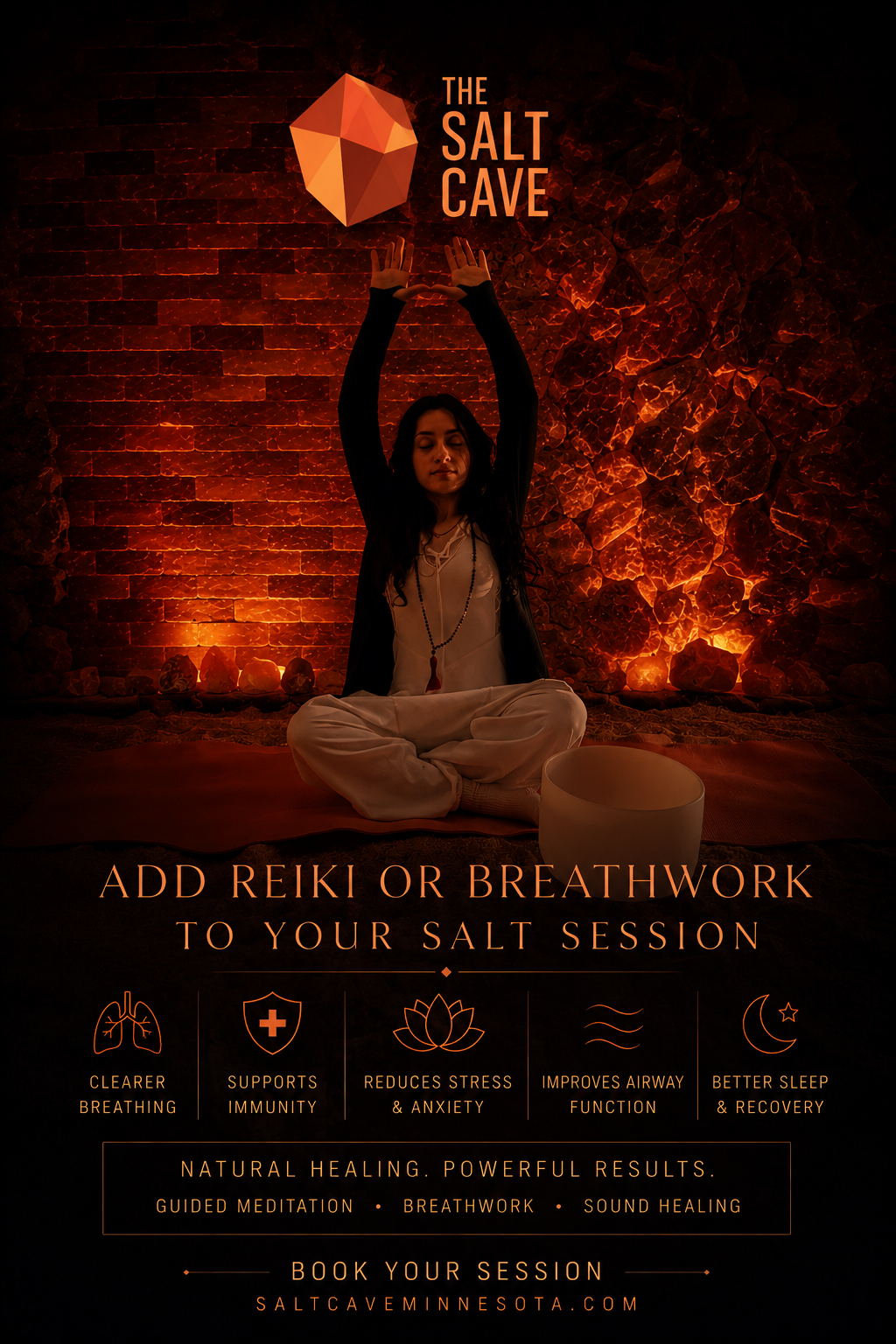
At The Salt Cave Minnesota, Reiki is elevated by combining it with the peaceful environment of our Himalayan salt cave. As you relax during your Reiki session, you are also immersed in the tranquil atmosphere of dry salt therapy (halotherapy), allowing you to experience two restorative wellness modalities at the same time.
Our team includes highly experienced Reiki Masters who have spent years developing their skills and guiding clients through deeply relaxing, personalized sessions. Their calm, intuitive approach creates an environment where many guests find it easier to let go of stress, quiet the mind, and simply be present.
While your Reiki practitioner focuses on your overall sense of balance and relaxation, you are simultaneously breathing the clean, dry, mineral-rich air of the salt cave. Many guests appreciate this combination because they can enjoy the calming atmosphere of halotherapy while receiving individualized Reiki care—all within one peaceful session.
The result is an experience that nurtures both mind and body: a quiet refuge where you can disconnect from the demands of daily life, breathe deeply, relax completely, and leave feeling refreshed, grounded, and renewed.
FIND MORE INFORMATION!
Learn more about our events and offerings and how salt therapy can help you!